Food Safety Starts with Quality Commercial Refrigeration
Discover how Adande's refrigerated drawer design keeps temperatures consistent, reduces food waste, and supports food safety in commercial kitchens.
Published 3 min read
Every September, the National Restaurant Association turns the industry’s attention to food safety. Posters go up. ServSafe modules get assigned. Managers run refresher training on handwashing and thermometers.
All of it matters. None of it fixes the thing quietly working against you every single time someone opens a fridge door.
The Problem Nobody's Training Covers
Here’s what actually happens when a standard cabinet fridge door opens: cold air falls straight out and pools on the floor. Warm kitchen air rushes in to replace it. The compressor in most commercial refrigeration kicks in to compensate, working harder, cycling more, and creating temperature swings inside the cabinet that no amount of staff training can prevent.
Multiply that by every door opening during a dinner service. Multiply it by every kitchen in the country doing the exact same thing, hundreds of times a day.
Why This Isn't Just a "Nice to Have"
Temperature abuse isn’t an abstract compliance issue. It shows up as:
- Food waste — product that’s technically “in the fridge” but has spent hours cycling through unsafe temperature ranges
- Inconsistent quality — proteins that dry out, produce that wilts, prepped ingredients that don’t hold
And yet the fix most kitchens reach for is more training, not better equipment. Training solves human error. It doesn’t solve the fact that opening a door will spill cold air onto the floor.
The Drawer Advantage
This is the entire reason Adande refrigerated drawers exist. Instead of a vertical door, Adande’s patented design seals the cooling mechanism horizontally, above the drawer itself. When a drawer opens, cold air stays contained inside the insulated unit, like water in a bath. It doesn’t fall out, because there’s no gap for it to fall through.
It’s the same principle whether you’re talking about an under-counter fridge drawer tucked beneath a prep bench or a full bulk storage unit at the back of house: sealing the cold in horizontally, rather than losing it through a vertical door, is what makes the difference.
Combine that with Low Velocity Cooling, which circulates air gently enough that food can be packed edge-to-edge without leaving gaps, and you get something most cabinet fridges physically can’t offer: a genuinely even, consistent internal climate. No hot spots. No cold spots. No guessing whether the back of the shelf is holding temperature as well as the front.
That’s not a marketing claim — it’s a design outcome of moving the point of access from vertical to horizontal.
What This Means During Service
For chefs, the payoff isn’t abstract either:
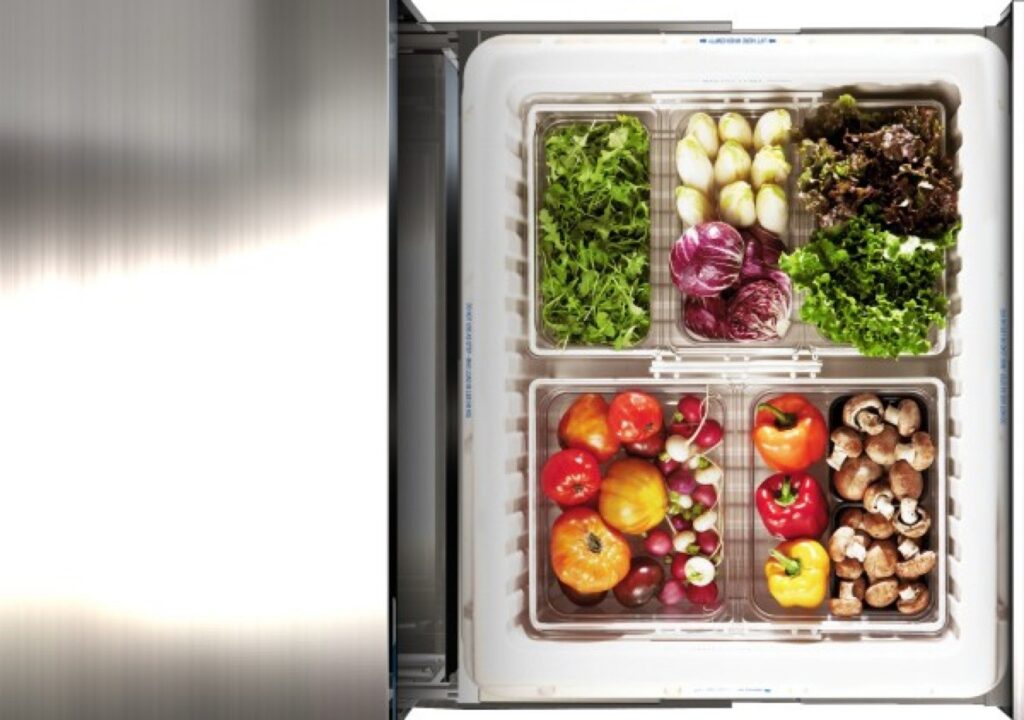
- Faster access — an aerial view of everything in the drawer, no digging through shelves
- Less product loss — ingredients hold their moisture and texture instead of drying out from temperature swings
- Fewer surprises on inspection day — because the equipment isn’t working against the standard you’re trying to hit
This is exactly why cookline refrigerated storage has become the standard for kitchens that can’t afford a walk-in trip mid-service. Positioning refrigerated drawers directly under a griddle or prep bench keeps ingredients within arm’s reach, without sacrificing the consistency a walk-in would normally provide.
The Takeaway for National Food Safety Education Month
Training your team is still essential — nothing here replaces that. But if you’re serious about food safety this month (and every month), it’s worth asking a different question than “are we following procedure?” Ask instead: is our equipment helping us, or is it something we have to compensate for? A door that spills cold air onto the floor every time it opens isn’t a training problem. It’s a design problem. And it’s one that’s already been solved.